IATD Resolves 2nd Alleged Usury, Deceptive Trade Practices Consumer Complaint Against RNR Tires.
 IATD CONSUMER VICTORY: RNR TIRE CONTRACT VOIDED AFTER ADVOCACY CAMPAIGN
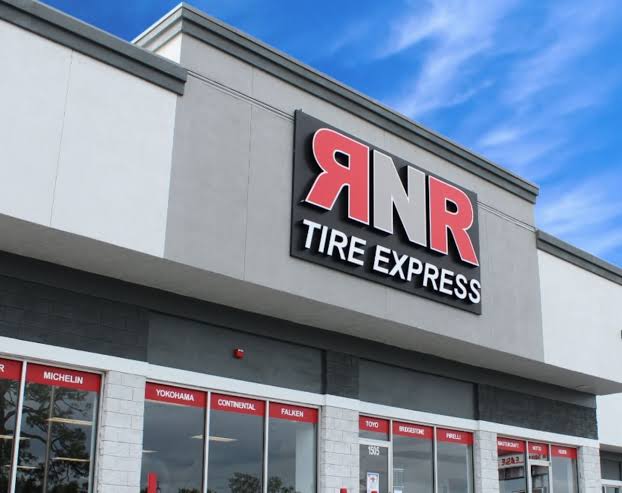
SPARTANBURG, SOUTH CAROLINA — I Am The Discarded (IATD) is announcing a consumer advocacy victory after its intervention in a disputed tire agreement involving a consumer and RNR Tire Express in Spartanburg, South Carolina resulted in the consumer contract being voided.
The dispute surrounded a consumer rental-purchase agreement opened through RNR Tire Express in Spartanburg, South Carolina. The complaint alleged, violations under the South Carolina Unfair Business Practice.
FACTUAL BASIS OF THE COMPLAINT
I Am The Discarded challenged the disputed agreement after a Spartanburg consumer said more than $1,500 in payments left her still owing money on her tires.
The resolution followed an aggressive IATD advocacy campaign challenging the structure, disclosure and administration of the consumer’s agreement and demanding that RNR address the underlying dispute rather than simply continue collecting payments.
For IATD, this was the point of the campaign from the beginning: a signature on a contract does not end the conversation when a consumer raises credible questions about what she was told, what she understood she was purchasing, how her money was being applied, and what the transaction would ultimately cost her.
MORE THAN $1,500 PAID — AND QUESTIONS REMAINED
Byrd sought IATD’s assistance after paying more than $1,500 under an agreement involving tires obtained from the RNR Tire Express location at 1280 Asheville Highway in Spartanburg.
According to the complaint presented by IATD, our client disputed how her approximately $72 payments were being allocated and maintained that only a limited portion of those payments appeared to advance her toward actual ownership of the tires.
IATD formally challenged the alleged balance and demanded a complete accounting explaining where our client’s money had gone and the contractual and legal basis for portions of her payments that were not being credited toward ownership.
The advocacy group also demanded that RNR investigate what its employees represented to the client before the transaction, whether the total acquisition cost and payment duration were adequately disclosed, how the $72 payments were explained, whether oral representations differed from the written agreement, and whether Byrd received adequate opportunity to understand the documents before becoming contractually obligated.
IATD’s central demand was straightforward: cancel the disputed agreement and stop attempting to enforce a contract the consumer was challenging.
That central objective has now been achieved.
THE BYRD CASE RAISES A LARGER QUESTION
As IATD investigated the client’s complaint, one question became increasingly difficult to ignore:
Was this simply one consumer misunderstanding one contract—or were other consumers reporting similar problems?
Publicly available consumer complaints indicate that our client is far from the only RNR customer to raise concerns involving payments, payoff calculations, automatic withdrawals, rental-purchase terms and collection practices.
The Better Business Bureau profile covering RNR Tire Express headquarters and its corporate-owned locations currently reflects approximately 360 complaints during the preceding three-year period. BBB’s current complaint categories include 179 service or repair complaints and 80 billing complaints, along with product, order, sales/advertising and customer-service complaints. Importantly, those figures apply to the BBB profile’s headquarters and corporate-owned locations and should not be interpreted as complaints against every RNR franchise.
SAME-AS-CASH AND PAYOFF DISPUTES
Several recent BBB complaints describe disputes surrounding promotional “same-as-cash” periods.
One consumer alleged that after believing the tires had been paid within the promotional period, the customer was later told an additional $1,170 was due because the final payment had allegedly missed the deadline. The complainant also alleged difficulty obtaining payment records and understanding the account balance.
Another recent consumer complained that the payment amount presented through an online portal differed from the amount allegedly necessary to satisfy the promotional terms and avoid conversion to a substantially more expensive lease arrangement.
These are consumer allegations—not judicial findings—but the recurrence of disputes involving payoff dates, account balances and promotional-payment structures warrants attention.
UNAUTHORIZED OR CONTINUING WITHDRAWALS
Other consumers have alleged that RNR continued withdrawing money or attempted charges they say were not authorized.
A recent BBB complaint alleges that after an account had been confirmed paid in full and the consumer was told payments would stop, another ACH debit was subsequently taken from the bank account.
Another complaint alleges repeated attempts to charge a debit card that had been authorized for only one specific transaction, while a separate complaint describes disputed payment attempts occurring outside the consumer’s stated biweekly payment schedule.
AND IT HAS BEEN REPORTED IN SPARTANBURG
The issue is not limited to consumers hundreds of miles away.
A complaint appearing on the BBB page for RNR Tire Express in Spartanburg describes a customer who alleged that $94 automatic withdrawals continued after the consumer believed the account had already been paid off.
According to that published complaint, the consumer challenged RNR’s position that it was the customer’s responsibility to stop recurring payments and argued that the company should not continue taking money after the amount owed had been satisfied. Again, the complaint represents the consumer’s allegations rather than an adjudicated finding.
That local complaint is significant because IATD’s original demand on behalf of our client specifically called upon RNR to investigate whether other consumers had raised substantially similar complaints involving the Spartanburg location or the same contract and payment-allocation practices.
COLLECTION AND REPOSSESSION CONCERNS
Consumers have also reported aggressive collection disputes associated with rental-purchase tire and wheel agreements.
Published BBB complaints include allegations involving threats to remove tires, collection contacts and disputes over merchandise when consumers fall behind or when the parties disagree about the amount actually owed. In one recent complaint, a consumer alleged being told that tires could be removed if an additional disputed payment was not made.
The existence of such complaints does not establish that RNR acted unlawfully in every case. Rental-purchase agreements may grant companies contractual remedies when customers default.
But that makes clear disclosure of the agreement, accurate accounting, transparent payoff information and proper authorization for electronic payments even more important—not less.
A CONTRACT IS NOT A LICENSE TO STOP ASKING QUESTIONS
IATD rejects the notion that consumer advocacy should end with the sentence:
“You signed the contract.”
A signed agreement matters.
So does how it was presented.
So does what the salesperson represented.
So does whether material financial terms were clearly disclosed.
So does whether the consumer received accurate payoff information.
So does how each payment was applied.
And so does whether money continued to be withdrawn after authorization ended or an obligation was satisfied.
Those were among the reasons IATD demanded that RNR conduct a substantive investigation instead of relying exclusively on the existence of Byrd’s signature.
IATD: THE CENTRAL DEMAND WAS MET
IATD’s July consumer demand sought extensive relief, including cancellation of the disputed agreement, a zero balance, an end to collection activity and automatic withdrawals, a complete accounting and written corrective action.
The subsequent voiding of Byrd’s consumer contract represents a successful resolution of the central issue IATD was retained to fight.
It also demonstrates something consumers too often forget:
You can challenge a contract.
Signing a document does not prohibit a consumer from disputing misrepresentations, questionable accounting, undisclosed terms, unauthorized withdrawals or other conduct surrounding the transaction.
And consumers do not have to fight those battles alone.
THIS CASE MAY BE CLOSED. THE QUESTIONS ARE NOT.
IATD considers the Byrd contract dispute a consumer victory.
But the publicly reported complaints involving RNR raise broader questions about how rental-purchase tire agreements are explained, administered and enforced across individual locations.
IATD will continue reviewing consumer complaints and welcomes information from RNR customers who have experienced disputes involving:
- same-as-cash or promotional payoff deadlines;
- unexpected balances after substantial payments;
- unexplained payment allocation;
- continuing or unauthorized bank-card or ACH withdrawals;
- difficulty obtaining a payoff amount or account ledger;
- disputed fees;
- collection activity; or
- tire or wheel repossession disputes.
Consumers should preserve their agreements, receipts, bank statements, screenshots, payment histories, text messages, emails and any advertisements or representations made during the transaction.
One complaint can be dismissed as a dispute. A pattern deserves scrutiny.
And when warranted, IATD intends to provide it.
I AM THE DISCARDED
We WRITE the WRONGS.
Advocacy. Accountability. Consumer Protection.
IAmTheDiscarded.comIATD contends that RNR personnel misrepresented, minimized, or failed to clearly explain the transaction’s true cost and material terms, including how each of the $72 payments. Specifically, what amount would be allocated, how much of each payment would advance ownership, the total number and amount of payments required to obtain ownership, and the difference between the cash price and the total acquisition cost.
Had the consumer been clearly informed that she could pay more than $1,500 while receiving only approximately $500 in principal, purchase, or ownership credit, she would not have entered the agreement on those terms.
Accordingly, RNR Tires closed out the consumer’s account, totaled out the nearly $2,000 balance and allowed our client to retain the tires.
If you are dealing with a dispute, you can review consumer feedback or file a formal report through the Better Business Bureau RNR Profile.


Recent Comments